

The Complete Guide to Hydration for Hybrid & Endurance Athletes
Nov 26, 2025
The Complete Guide to Hydration for Hybrid & Endurance Athletes
Most athletes think hydration is simple: drink water and keep moving. But if you train for HYROX, hybrid competitions, long-distance running, Murph-style volume, or any combination of endurance + strength, hydration becomes one of the biggest factors in performance — and one of the easiest to get wrong.
This guide breaks down exactly how hydration works, how much you really need, why electrolytes matter more than you think, and how to set up a hydration plan you can actually follow. Whether you’re training in the heat, preparing for a race, or stacking two-a-days, this is the hydration blueprint your body actually responds to.
Why Hydration Matters More for Hybrid Athletes
Hybrid and endurance athletes live in the middle of two extreme energy systems: strength and aerobic performance. When you dehydrate even slightly, both systems crash — your power output drops, your heart rate rises, and your ability to repeat effort tanks.
Here’s what dehydration actually does to you:
- 2% dehydration → performance drop you can feel
- 3–4% dehydration → HR spikes, pace falls apart, strength output drops
- 5% dehydration → cramps, dizziness, nausea, race-ender territory
A lot of athletes think they’re fine because they “feel okay,” but feeling thirsty is already a sign you're behind. If you’re sweating 1–2 liters per hour (normal for HYROX pace), you’re draining fluid faster than your body can self-regulate.
The Hydration Equation: Water + Electrolytes + Timing
Hydration is not just water. It’s a balance of fluids, electrolytes, and timing. For functional fitness and hybrid events, electrolytes matter even more than the water itself.
Your sweat removes:
- Sodium (the big one — essential for muscle firing)
- Potassium
- Magnesium
- Calcium
If you only replace the water, but not the electrolytes, your blood becomes diluted. That leads to headaches, weakness, cramping, and “fade.” This is why chugging plain water never fixes dehydration during workouts.
Signs You Need More Electrolytes
These are the biggest red flags for electrolyte imbalance:
- Leg cramps during or after training
- Heart rate higher than normal for easy pace
- Headaches after long sessions
- Feeling “flat” or weak halfway through a workout
- Feeling like you can't recover between intervals
- Sudden loss of power output
If even two of these describe you, your hydration plan is off.
How Much Water Do You Actually Need?
Most hybrid athletes underdrink — not because they don’t want to hydrate, but because they don’t have a plan. Here’s the simplest formula that works:
Your sweat rate = Your hydration plan
The average athlete loses:
- 0.8 to 1.5 liters of sweat per hour (HYROX pace)
- 900–1400mg sodium per liter of sweat
So for most hybrid athletes, an effective hydration plan is:
- 16–24 oz (500–700 ml) of water per hour of training
- Electrolytes containing 600–900mg sodium per hour
This is where most hydration products fall short — they’re made for casual gym users, not athletes doing functional strength + cardio in the same session.

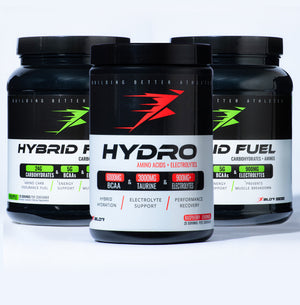
HYDRO – Low Calorie Performance Hydration
Built for hybrid athletes who need real electrolytes, not sugar water.
- High electrolyte levels designed for sweat-heavy training
- Low calorie so fueling stays clean
- Amino-enhanced for recovery and repeatability
Pre-Workout Hydration: What to Drink Before Training
If you want peak performance, you don’t start hydrating in the gym — you start 2–3 hours before.
2–3 hours before:
- 16–20 oz of water
- 300–500mg sodium
This “primes” your fluid balance.
15–20 minutes before:
- 6–10 oz of water
- Optional small amount of electrolytes if you sweat heavy
Do NOT chug 20oz right before training — you’ll feel sloshy and your stomach will hate you.
Hydration During Training
Your goal during training is simple: replace what you lose.
During hybrid or endurance sessions (45–90 minutes):
- 8–12 oz every 15–20 minutes
- Electrolytes every hour
During long runs, HYROX practice, or zone 3/4 tempo sessions:
- 16–24 oz per hour
- 600–900mg electrolytes
This prevents your output from dropping in the second half of the session — where most people fall apart.
Hydration for Strength Training
Even your power output is fluid-dependent. A dehydrated muscle can’t contract at the same intensity. That’s why strength workouts feel “flat” when you’re behind on fluids.
For strength-only days:
- Drink consistently during the day
- Add electrolytes if you sweat heavily or train in heat
- Drink 8–12 oz every 20–30 minutes during the lift
Post-Workout Hydration
Recovery hydration matters just as much as pre-workout. The goal is replacing what you lost and restoring electrolyte balance.
Post-workout checklist:
- 16–24 oz water
- Electrolytes (600–900mg sodium)
- Protein within 45 minutes
If your pee is dark yellow hours after training — you’re behind.
Hydration in Hot Weather
Heat takes hydration needs and multiplies them.
The hotter it gets:
- You sweat more
- You lose more sodium
- Your heart rate elevates faster
- Your pace drops
Hydration plan for heat:
- Electrolytes every 45 minutes
- 12–16 oz fluid every 20 minutes
- Salt your food or increase sodium intake
Should You Drink Only Water?
No. Not if you’re a serious athlete.
Water-only hydration leads to:
- Hyponatremia (dangerously low sodium)
- Cramping
- Brain fog
- Muscle weakness
- Destroyed endurance output
If you’re sweating hard, you need electrolytes — period.
The Bottom Line
If you're serious about hybrid performance, HYROX times, long runs, or two-a-day training, hydration is not optional — it’s performance fuel. When you treat hydration like part of your training program, everything improves: pacing, power, recovery, and the ability to repeat effort.
Build a hydration plan, stick to it, and test it during training — not race day.